A family home, ready for tomorrow.
Kelton
Rancho Park, Los Angeles
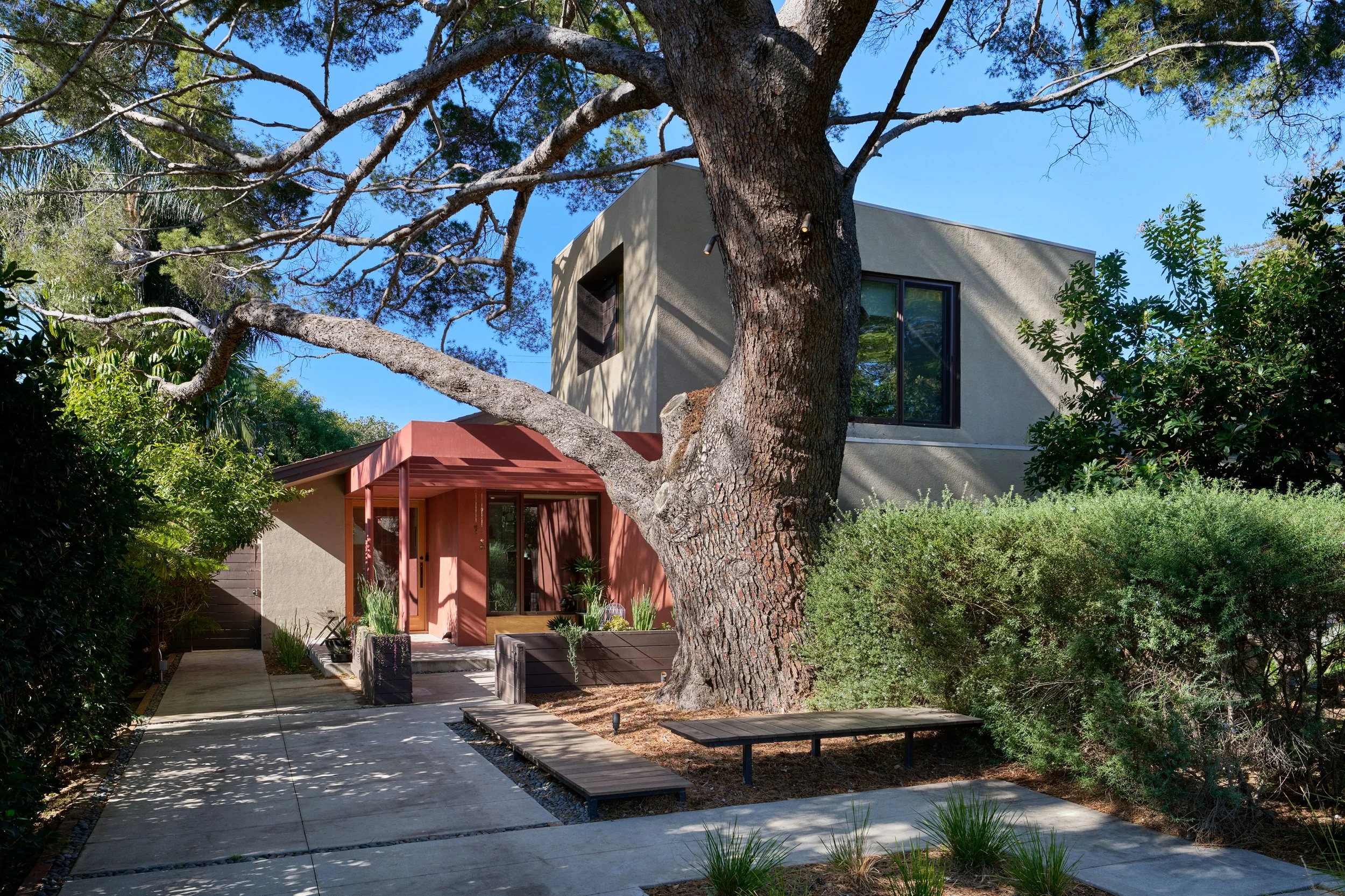
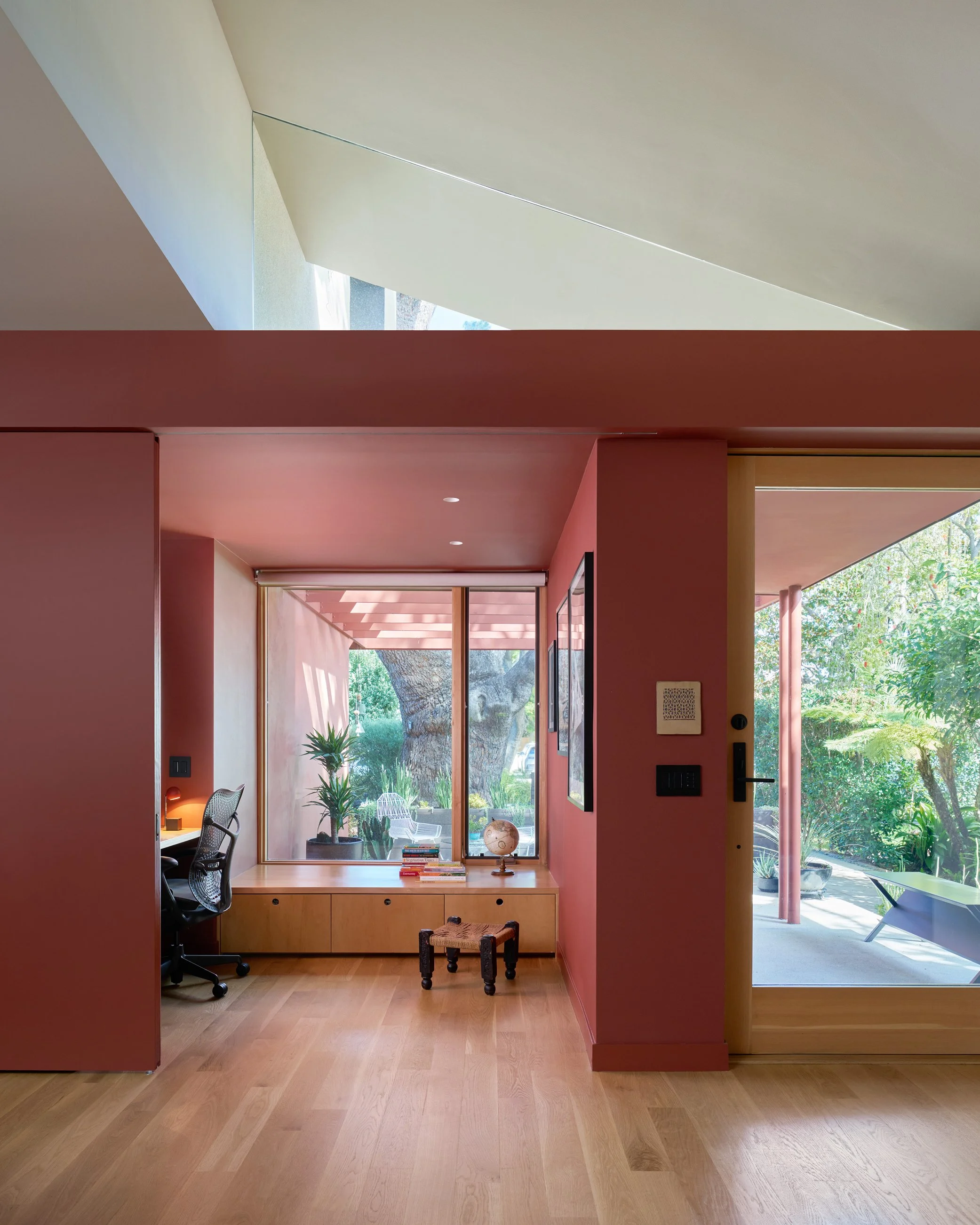
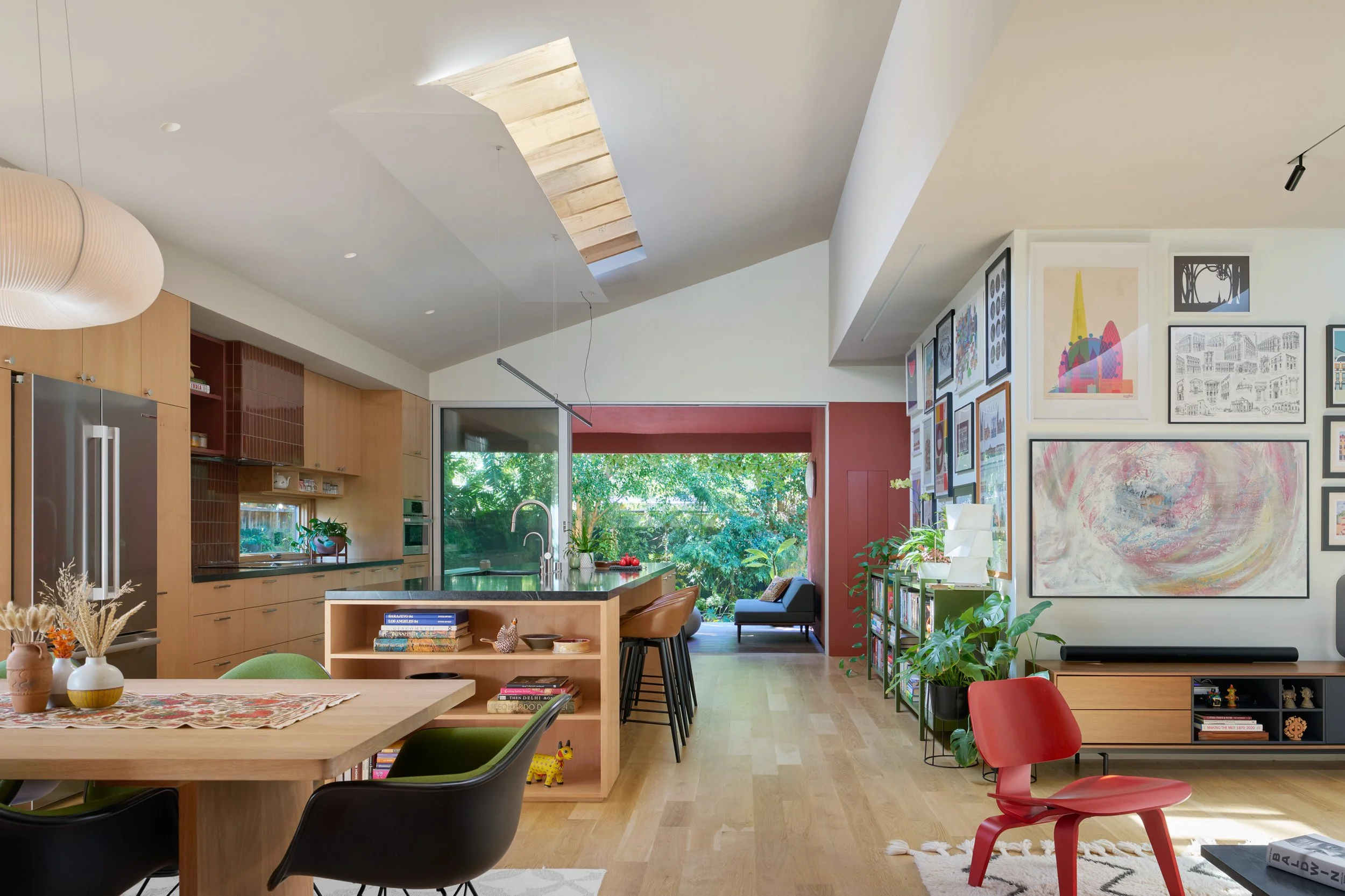
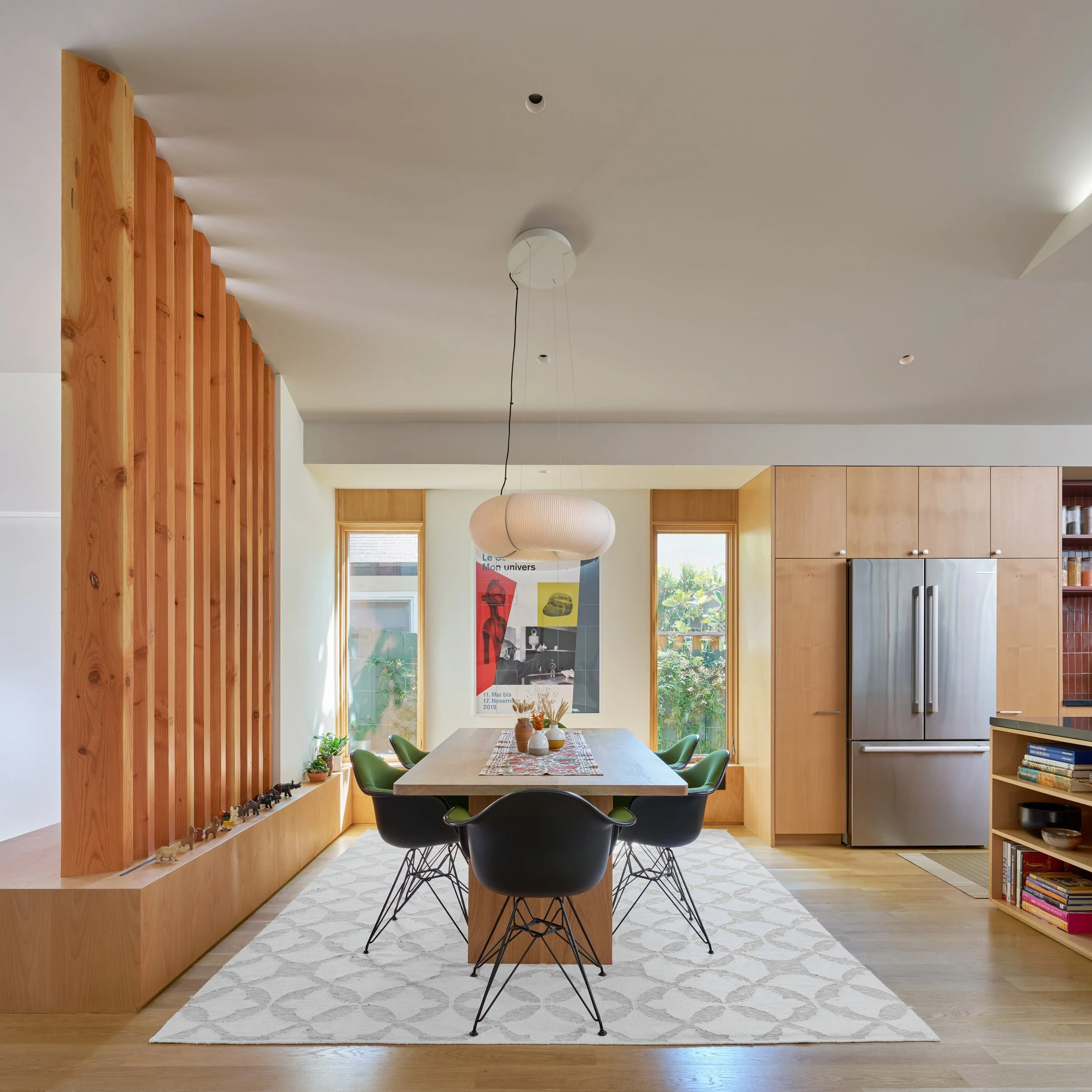
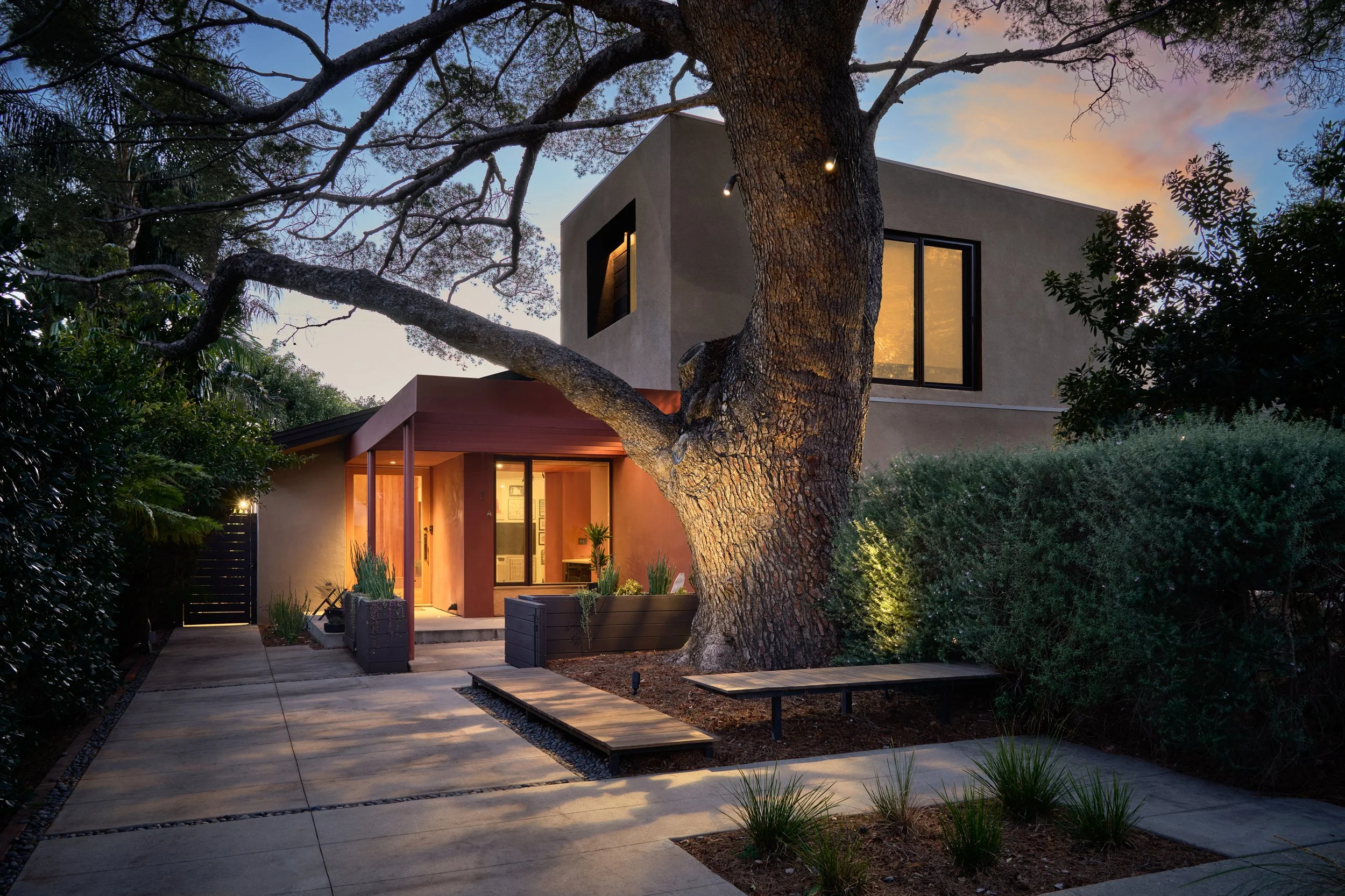
This home remodel saw a dark and compartmentalized 1980s design reimagined for a family entering a new chapter. The brief called for a home that could support remote work, welcome extended overseas guests, and grow with the family over time, all without losing sight of a modest budget or a beloved 140-year-old pine tree at the heart of the site.
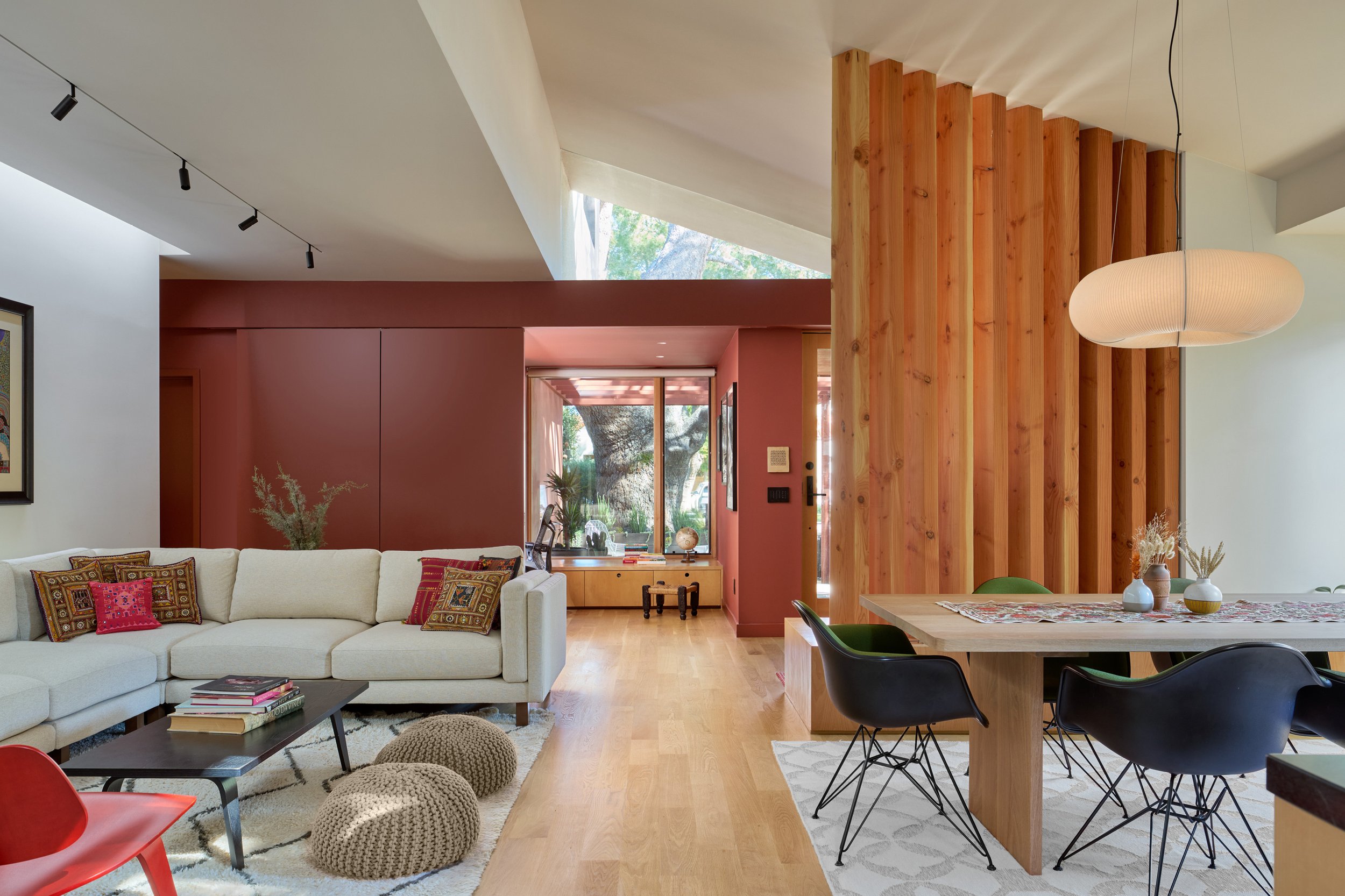
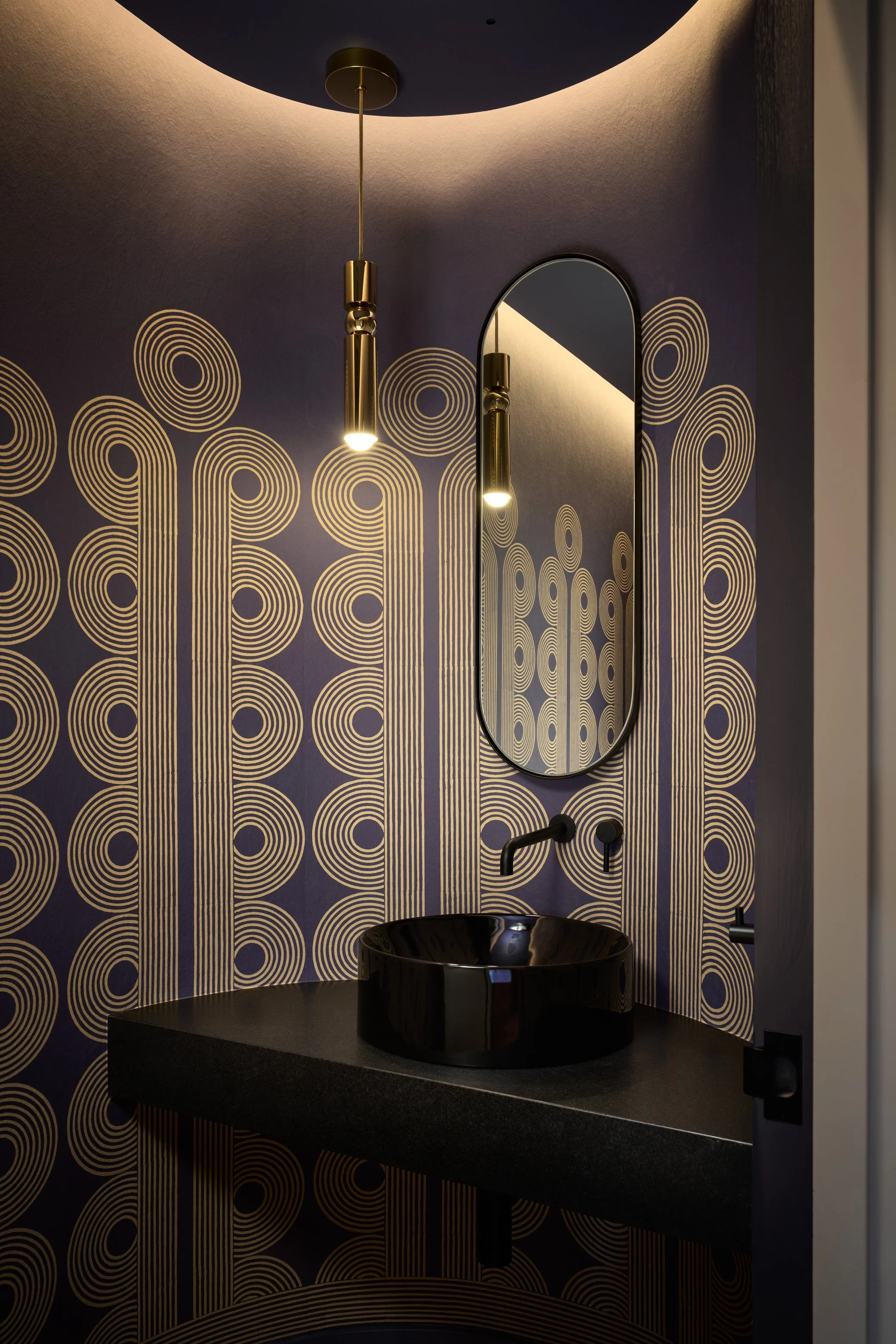
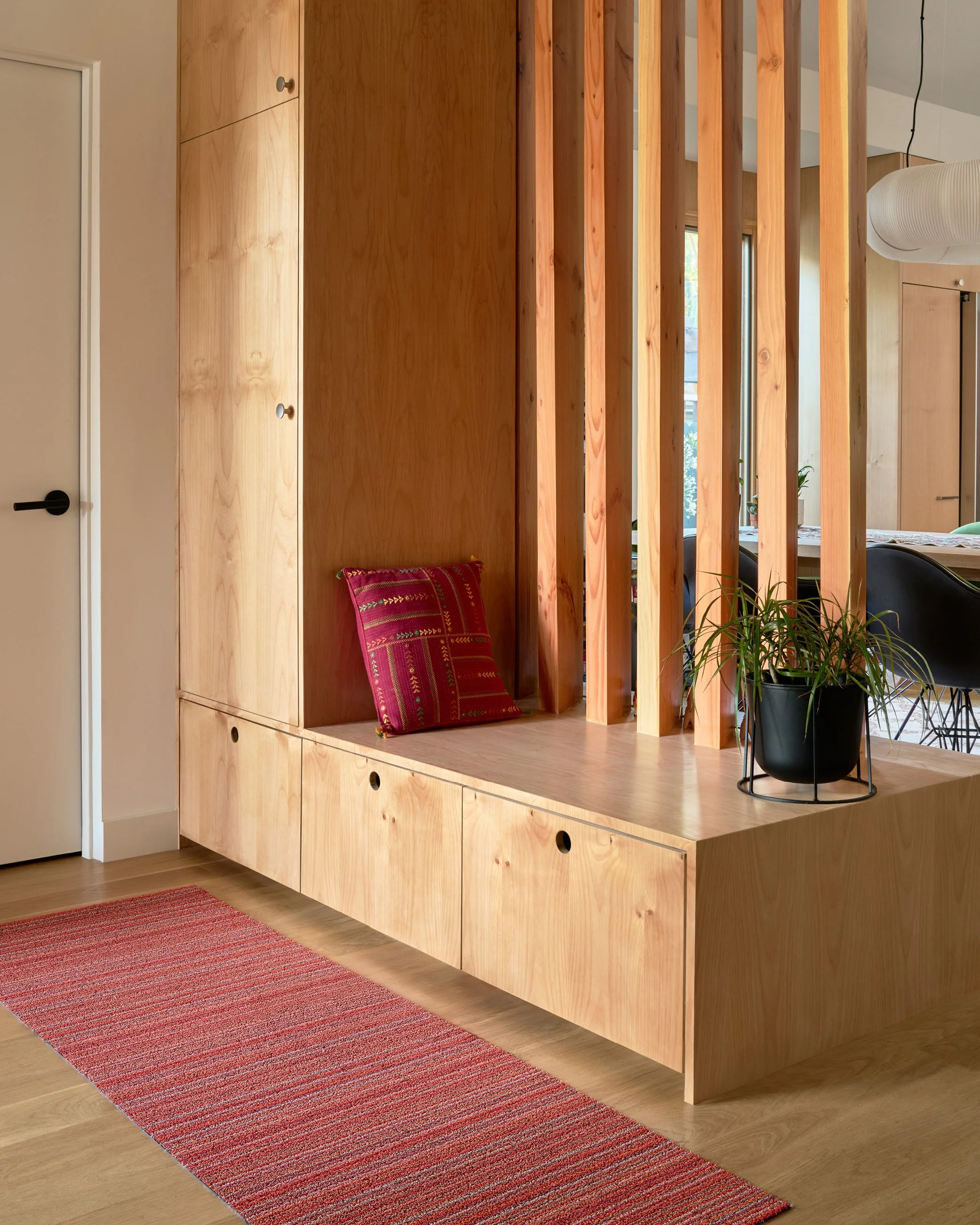
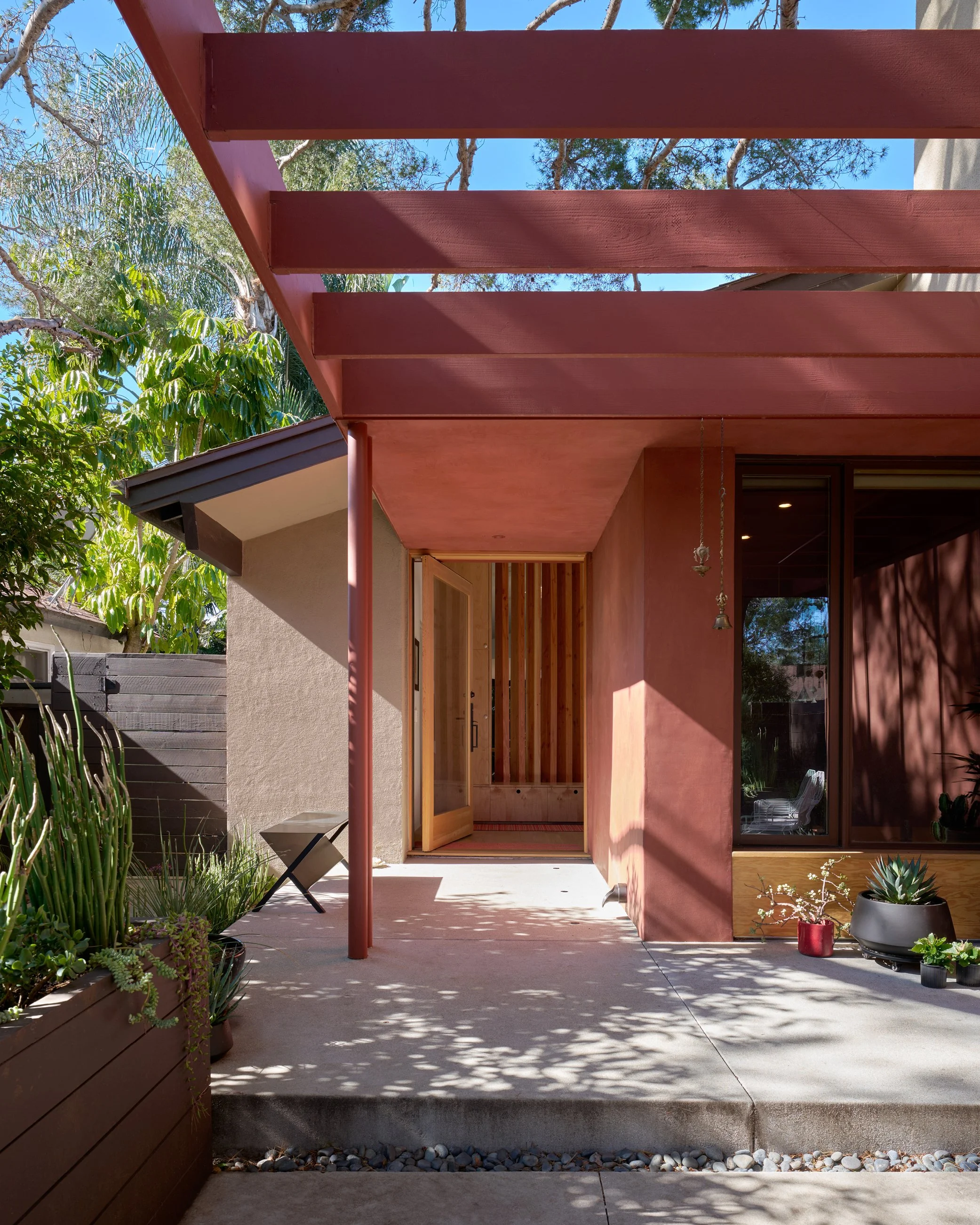
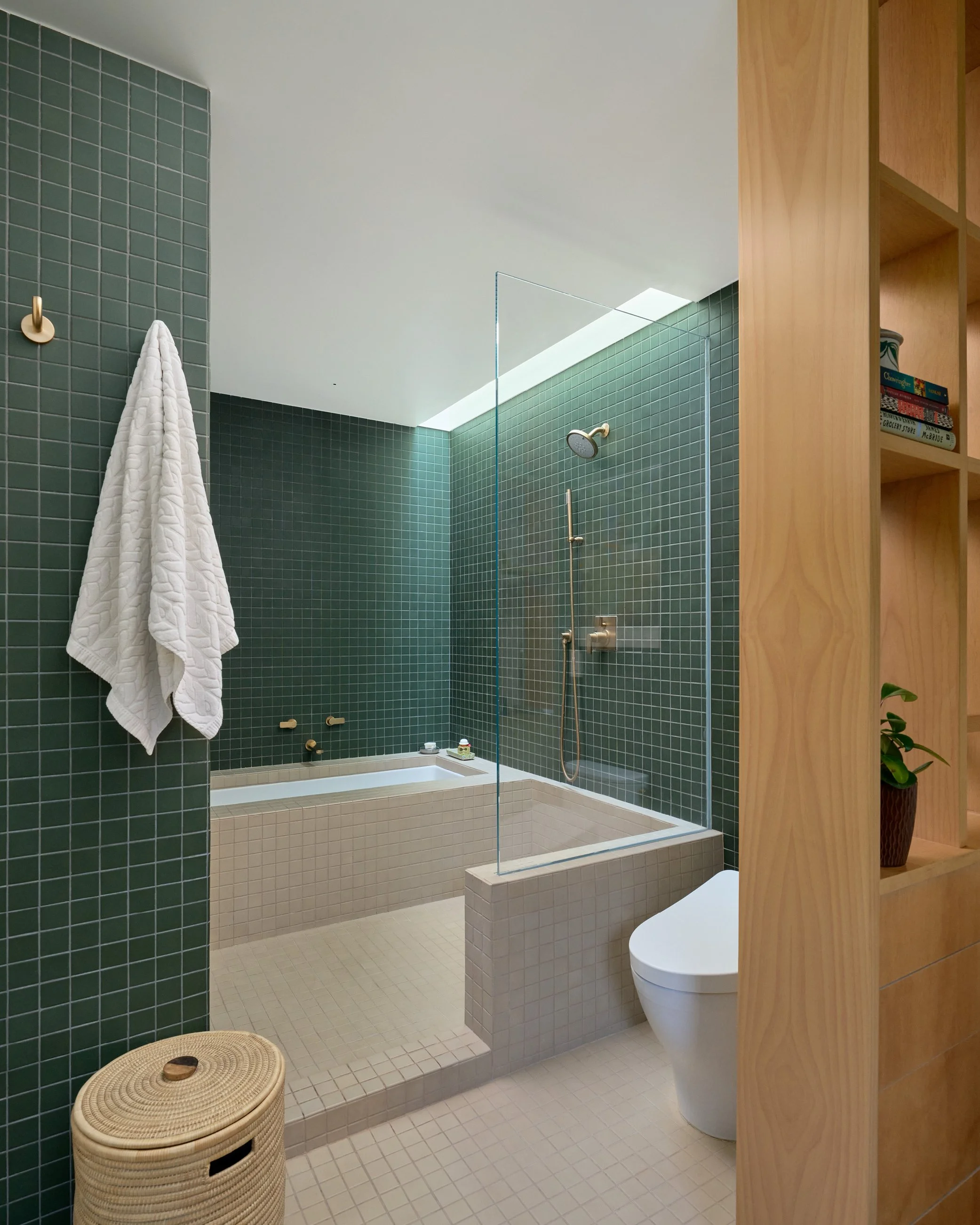
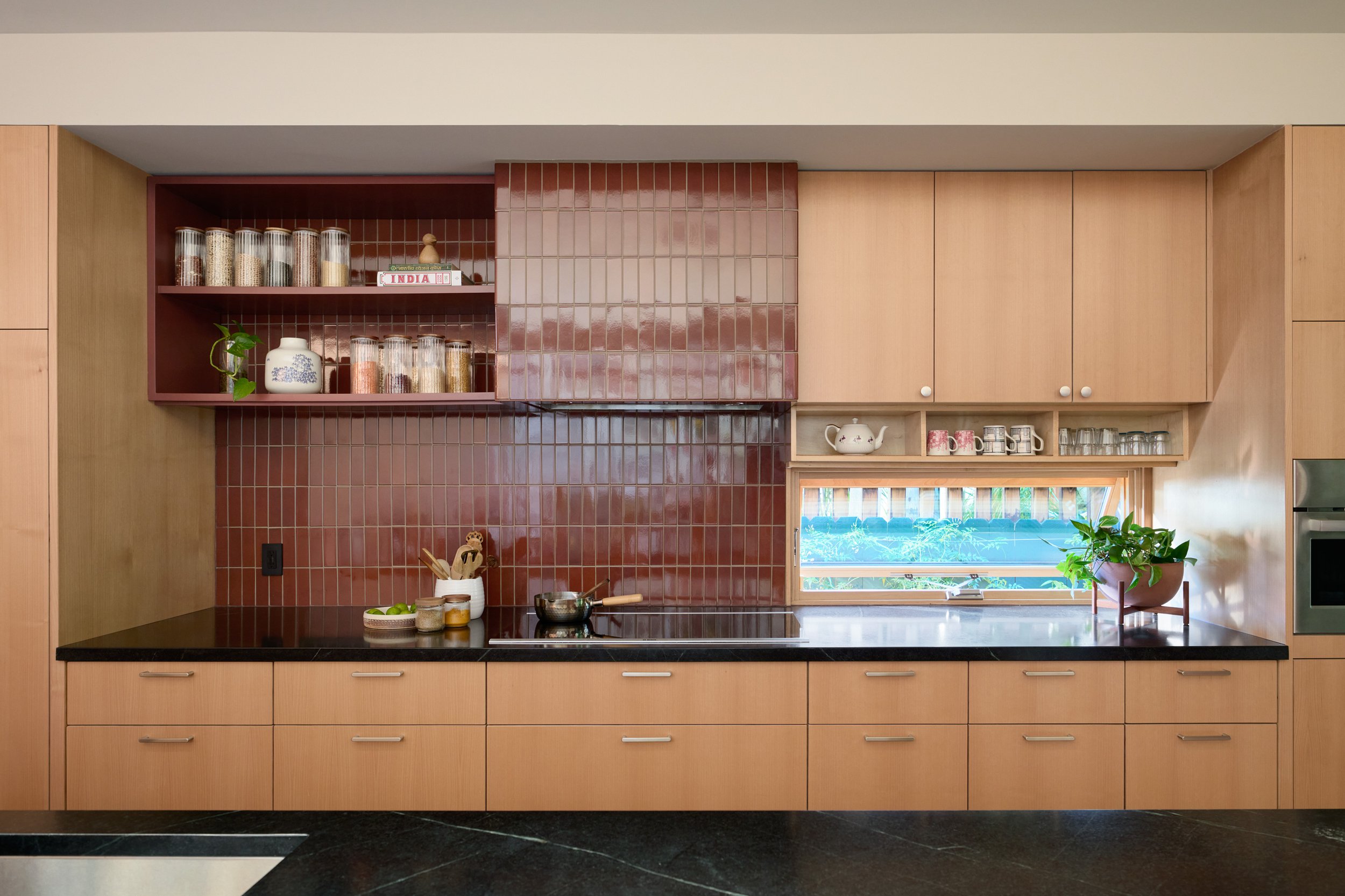
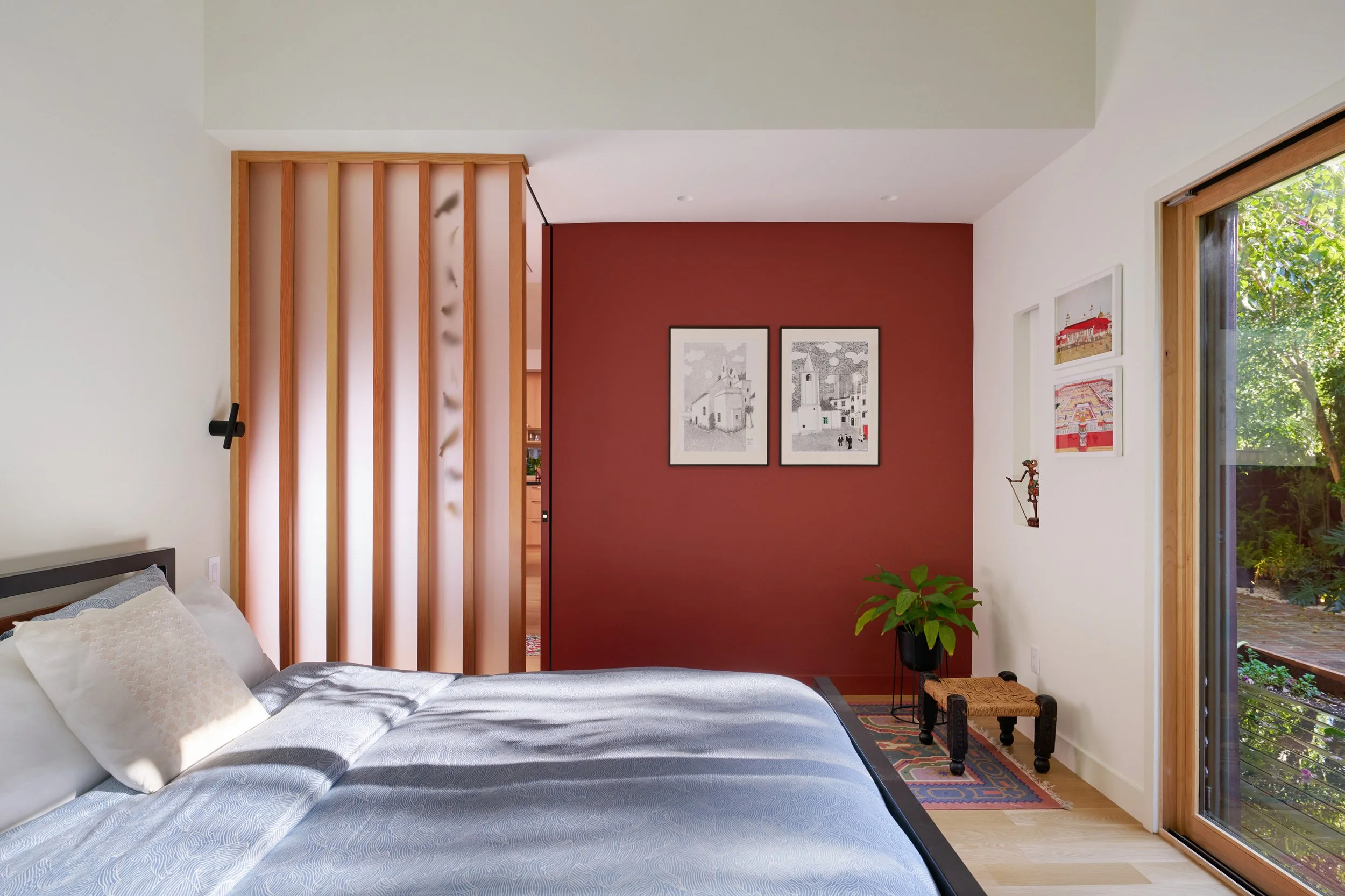
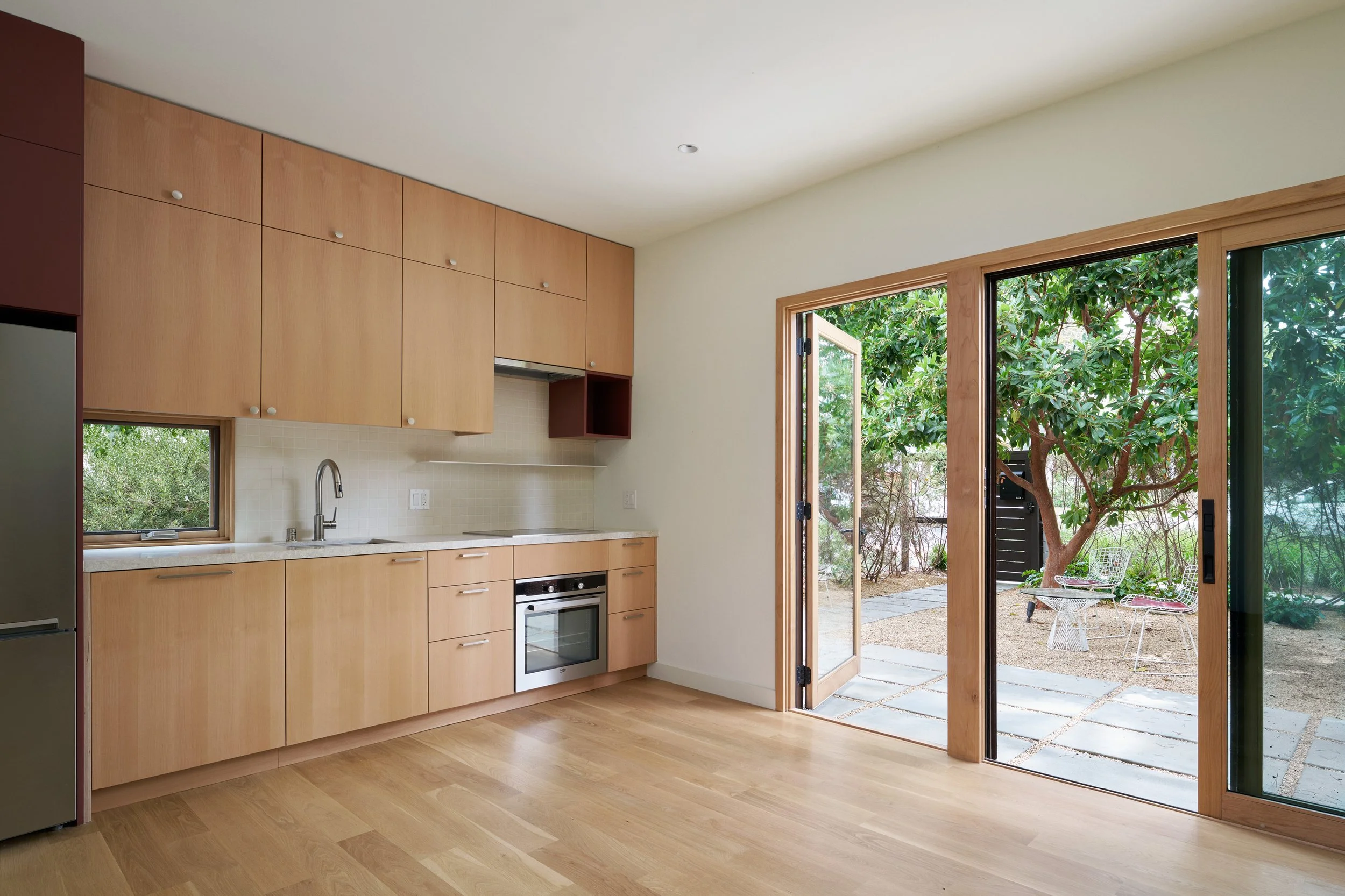
The result is a flexible, future-proofed residence with an attached ADU converted from the existing garage. Targeted interventions rather than costly expansions transformed the interior, enriching daily life without adding a single square foot. At the same time, expansive glass, deep overhangs, and a palette of Douglas fir, natural stone, and vibrant hand-glazed ceramics brought the family’s Indian heritage into every room.
IN THE DETAILS
-
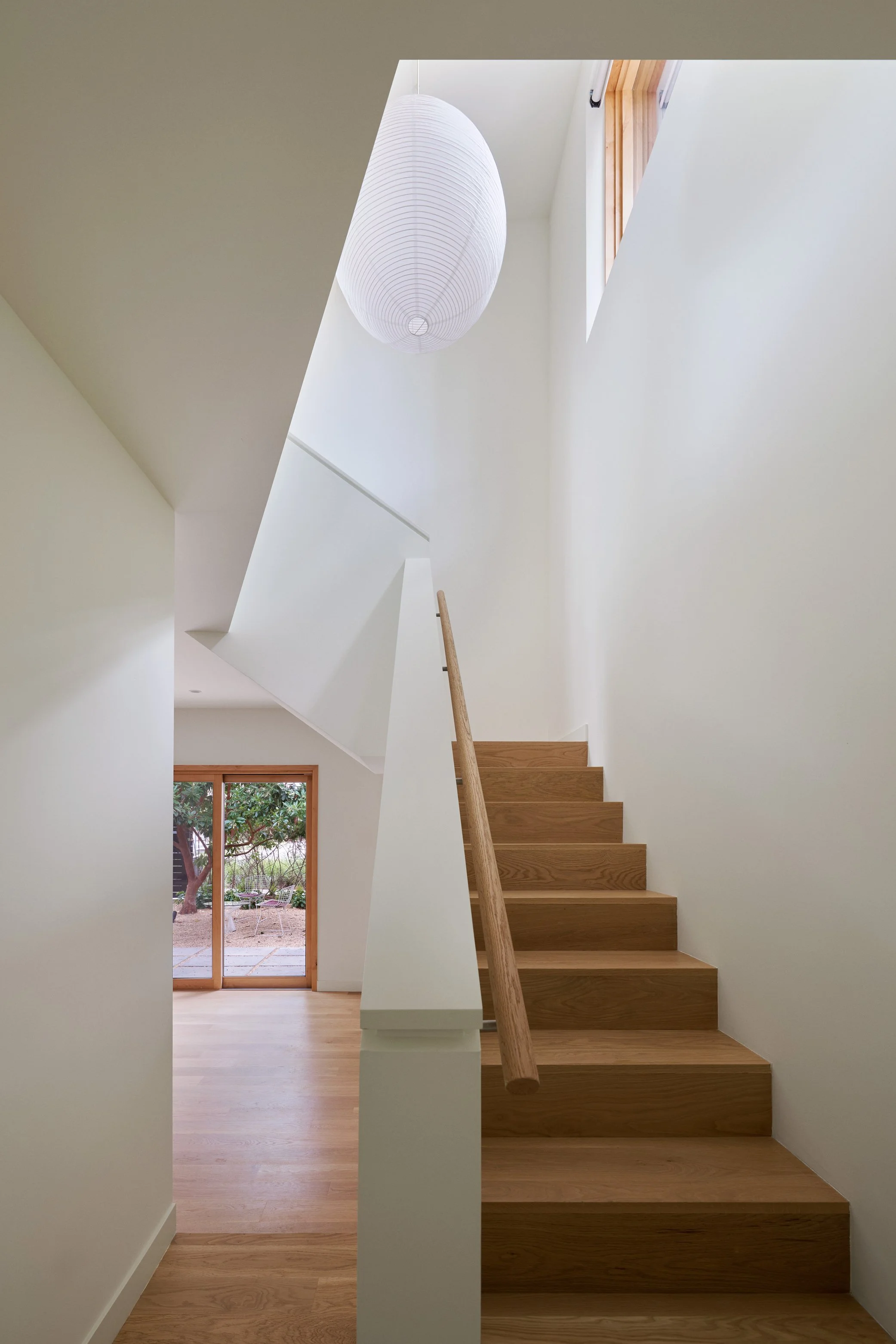
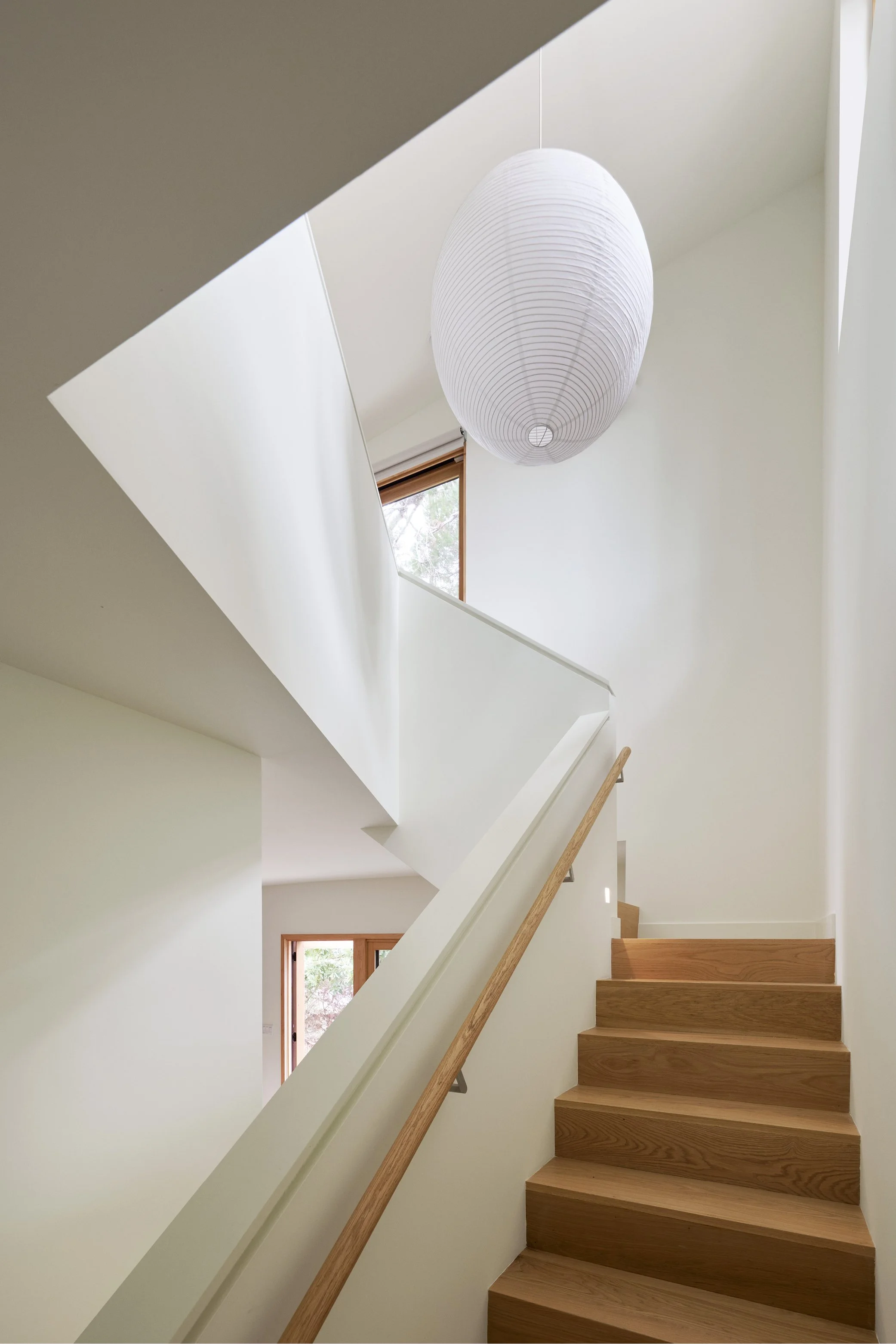
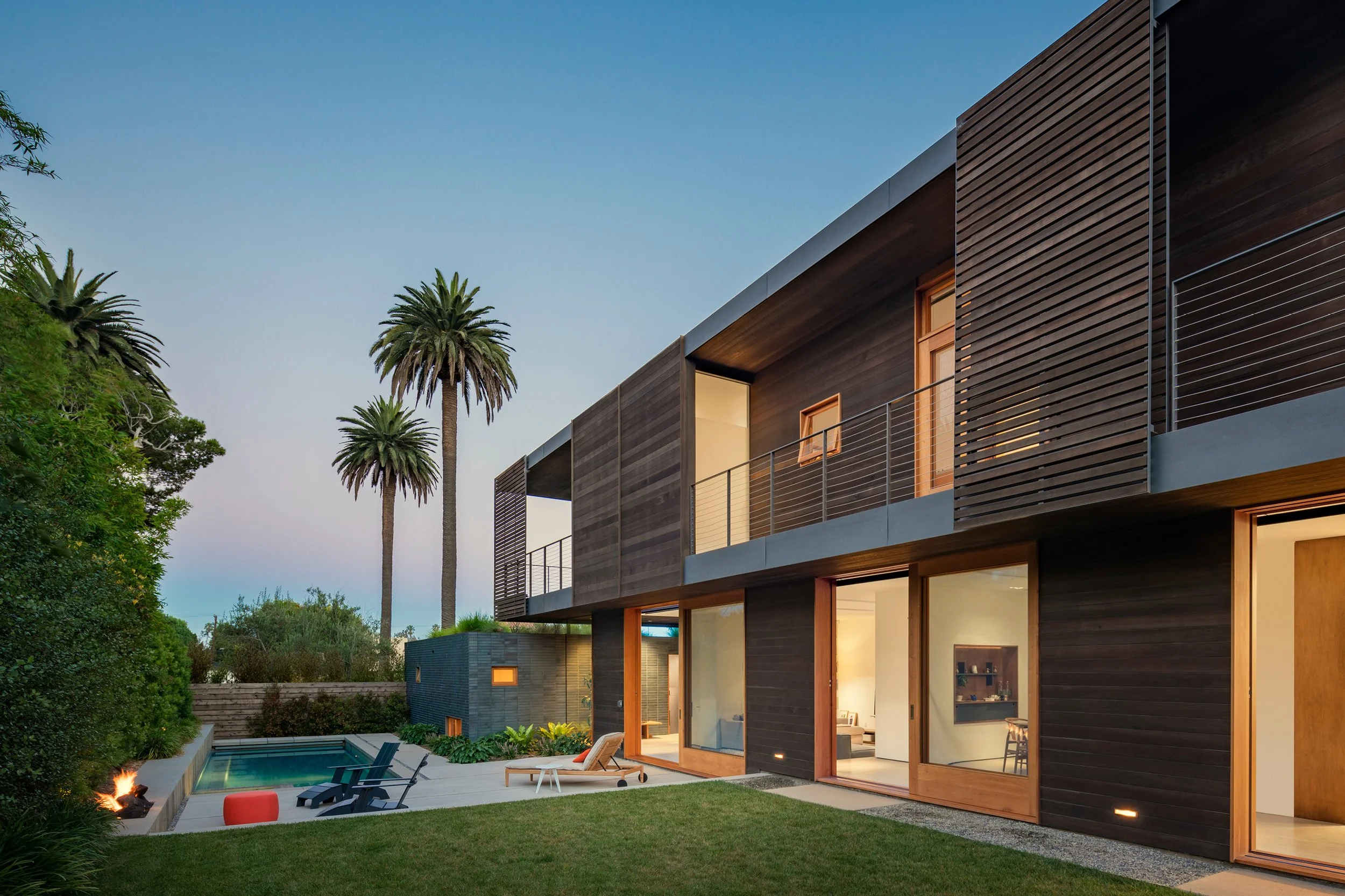
The house’s unique form was conceptualized as a narrow bar floating above two boxes. Living spaces are housed in a simple wood and glass bar, bookended by two low brick boxes that contain the guest house and music studio.
The narrow house steps up with the existing grade, justified to the west to optimize daylight in rooms and direct garden connections. The music studio is a detached space with a separate entry for guests through a lush submerged courtyard, conceived as a contemporary grotto. -
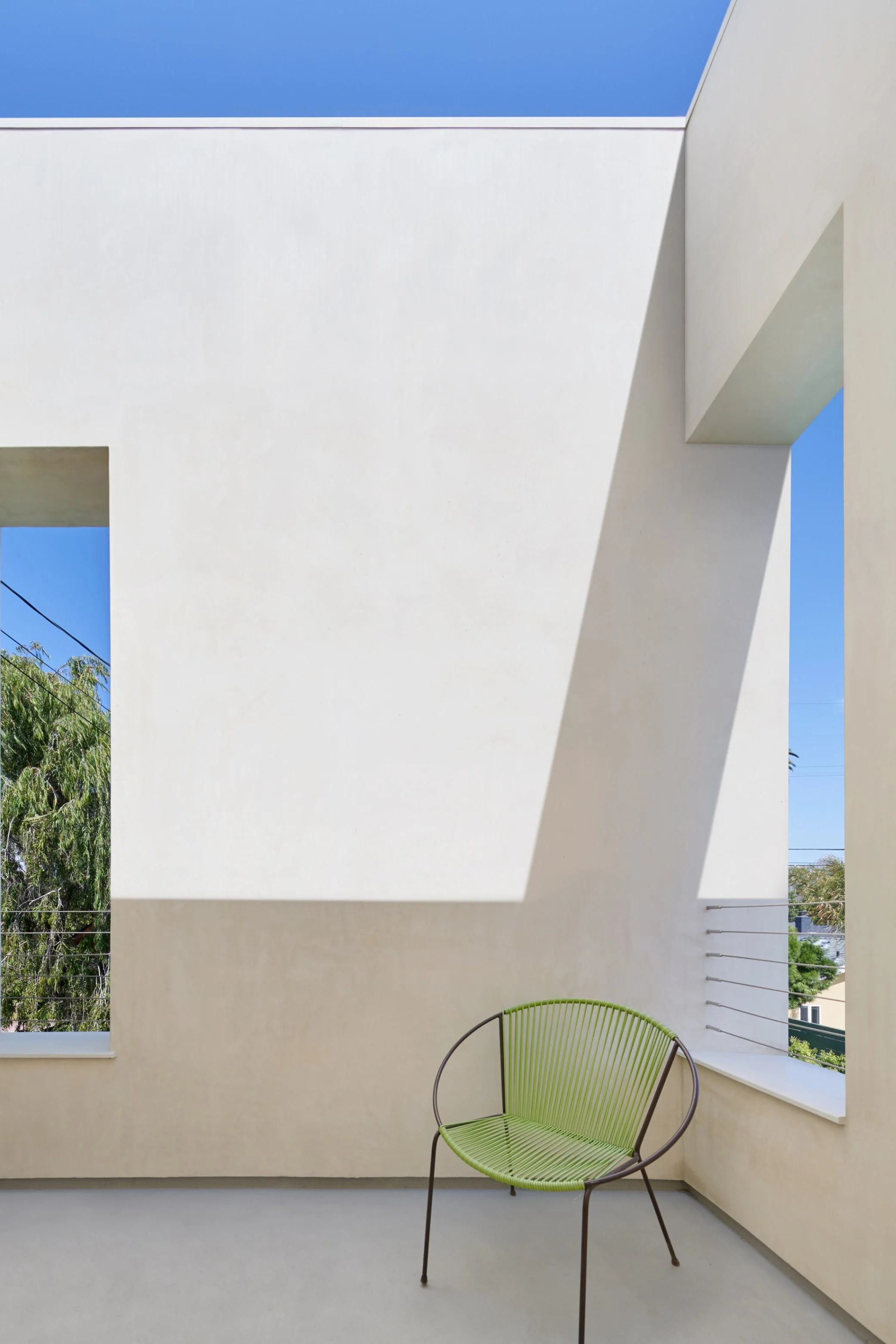
The low brick boxes contrast with the wood bar with punched wood windows playfully arranged to play with scale, daylight and views. Both are topped with a green roof of native grasses, drawing the landscape up to the second floor. Deep overhangs and movable timber slat screens along the east facade offer shade and privacy.
-
Outside, the house’s palette shows neutral and earthy tones using manganese ironspot brick, smooth cement plaster and aged cedar. By contrast, the interior finishes are bright and crisp with white walls, warm concrete floors, birch cabinets and cedar doors.
-
Low-tech sustainable strategies are integrated throughout. A narrow floor plate with strategically placed openings, overhangs, and high-performing building envelope materials results in a significantly reduced energy demand.
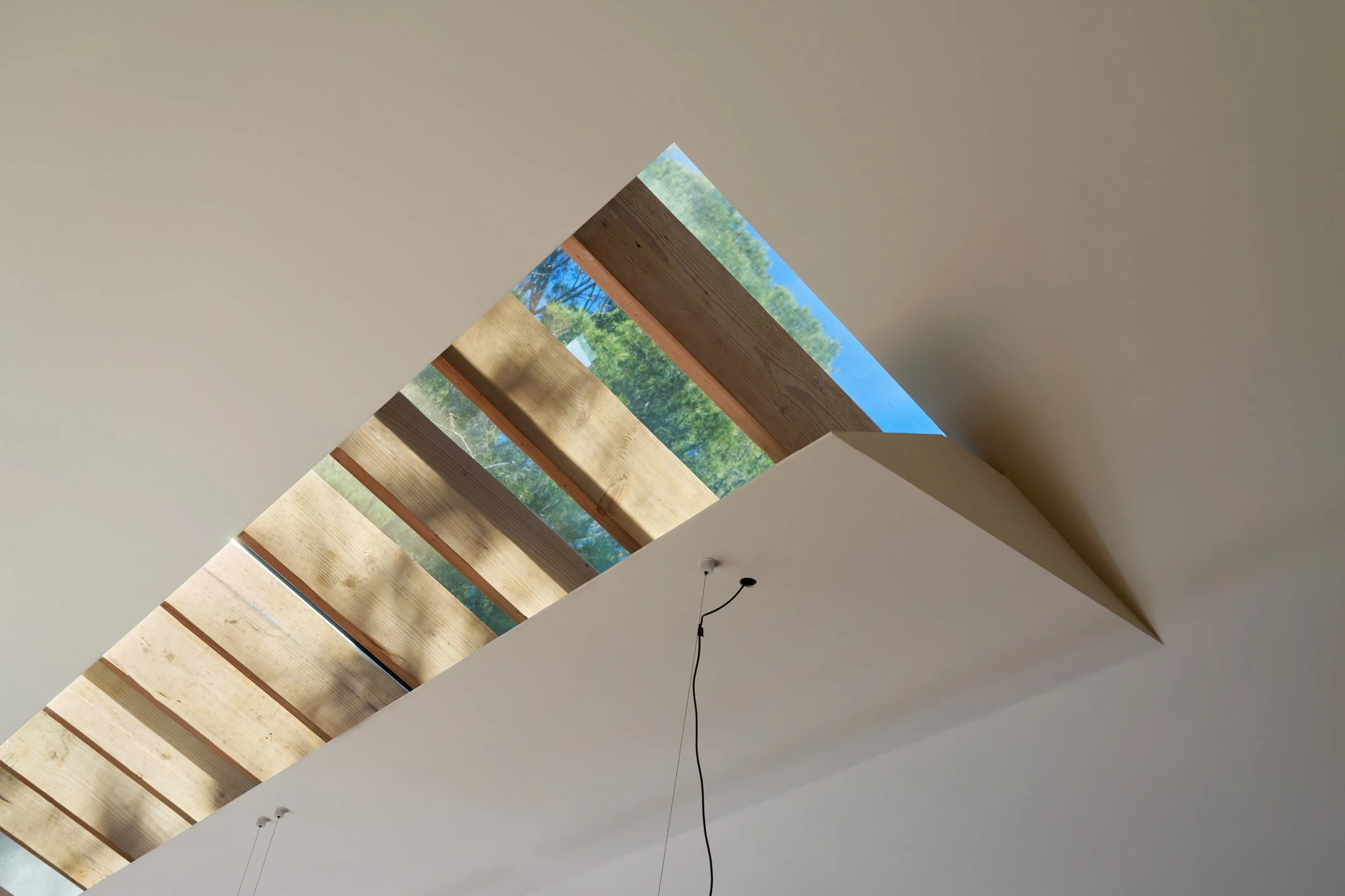
These features also allow passive heating and cooling solutions rather than a traditional HVAC system. Solar-heated radiant tubes embedded in the concrete floors warm the home. For air circulation, three large light monitors on the western facade capture and vent the day’s heat, circulating fresh air using passive design.
EUI of 10.4 kBtu/ft²/yr, is a 73% savings from baseline EUI of 38.4 kBtu/ft²/yr for similar size homes across the US. The annual savings of 31,283 kWh is enough energy to power 3 average US homes for an entire year.
CREDITS
PhotographyEric Staudenmaier
StructuralNOUS Engineering
Energy ConsultantNewton Energy
NEXT PROJECT
Boomerang House
Los Angeles
RESIDENTIAL
HOSPITALITY
COMMERCIAL